1. What is a tow bar used for?
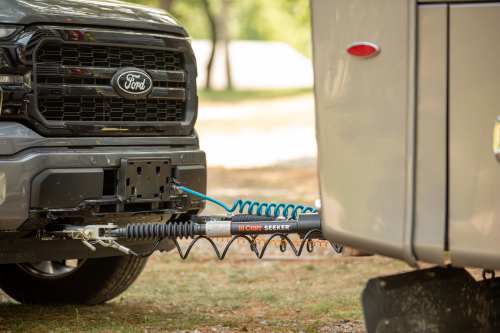
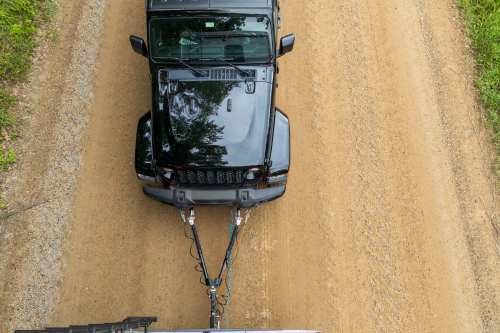
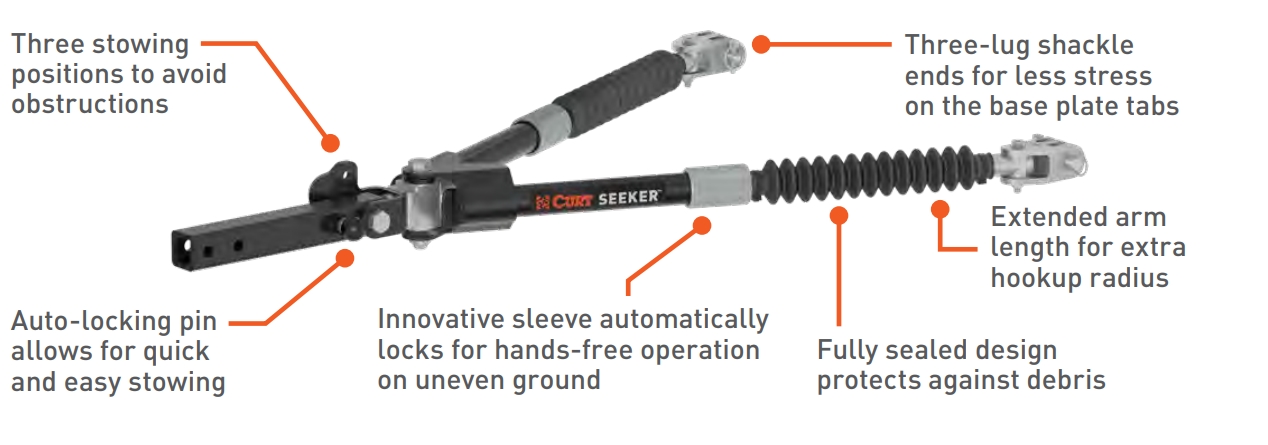
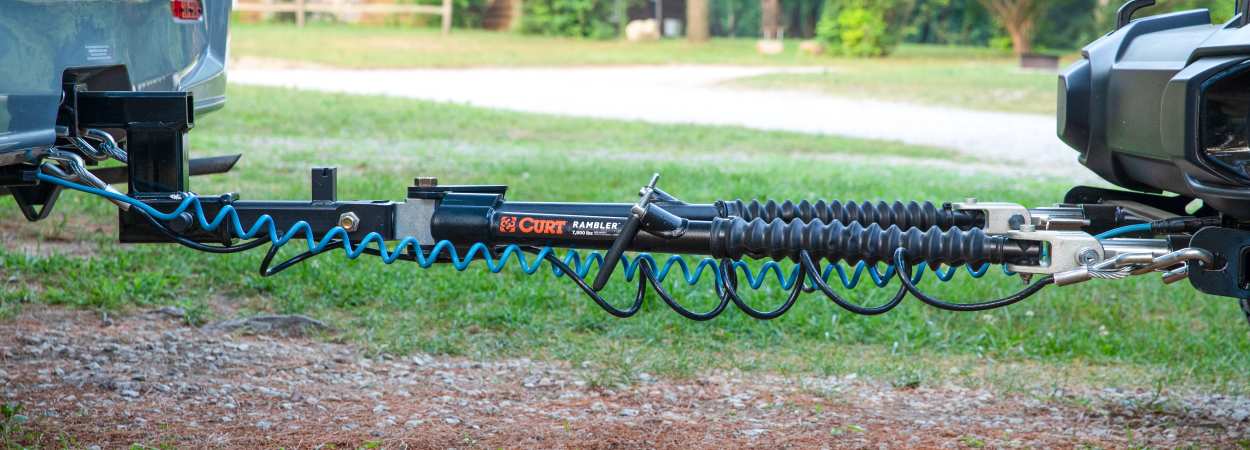
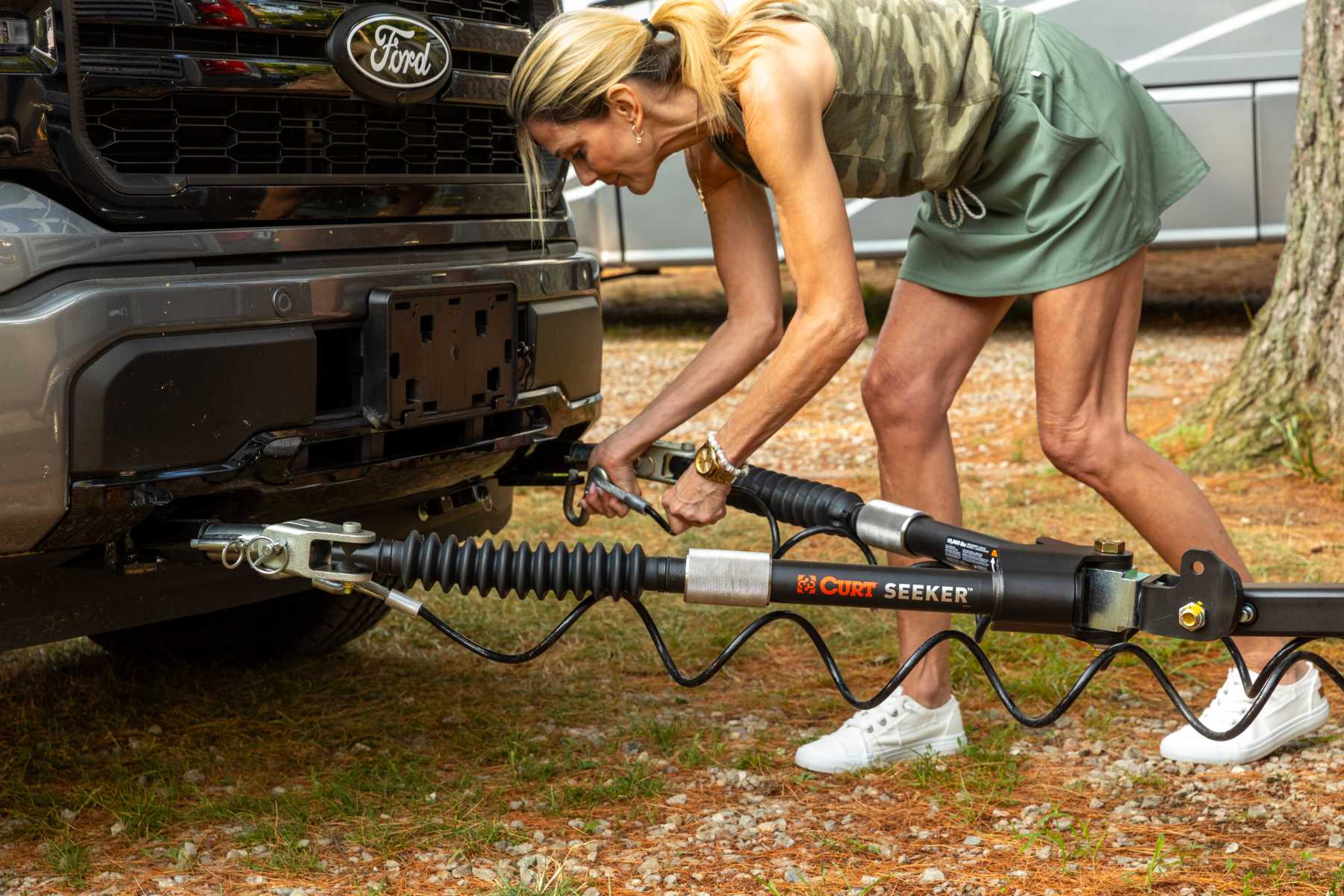
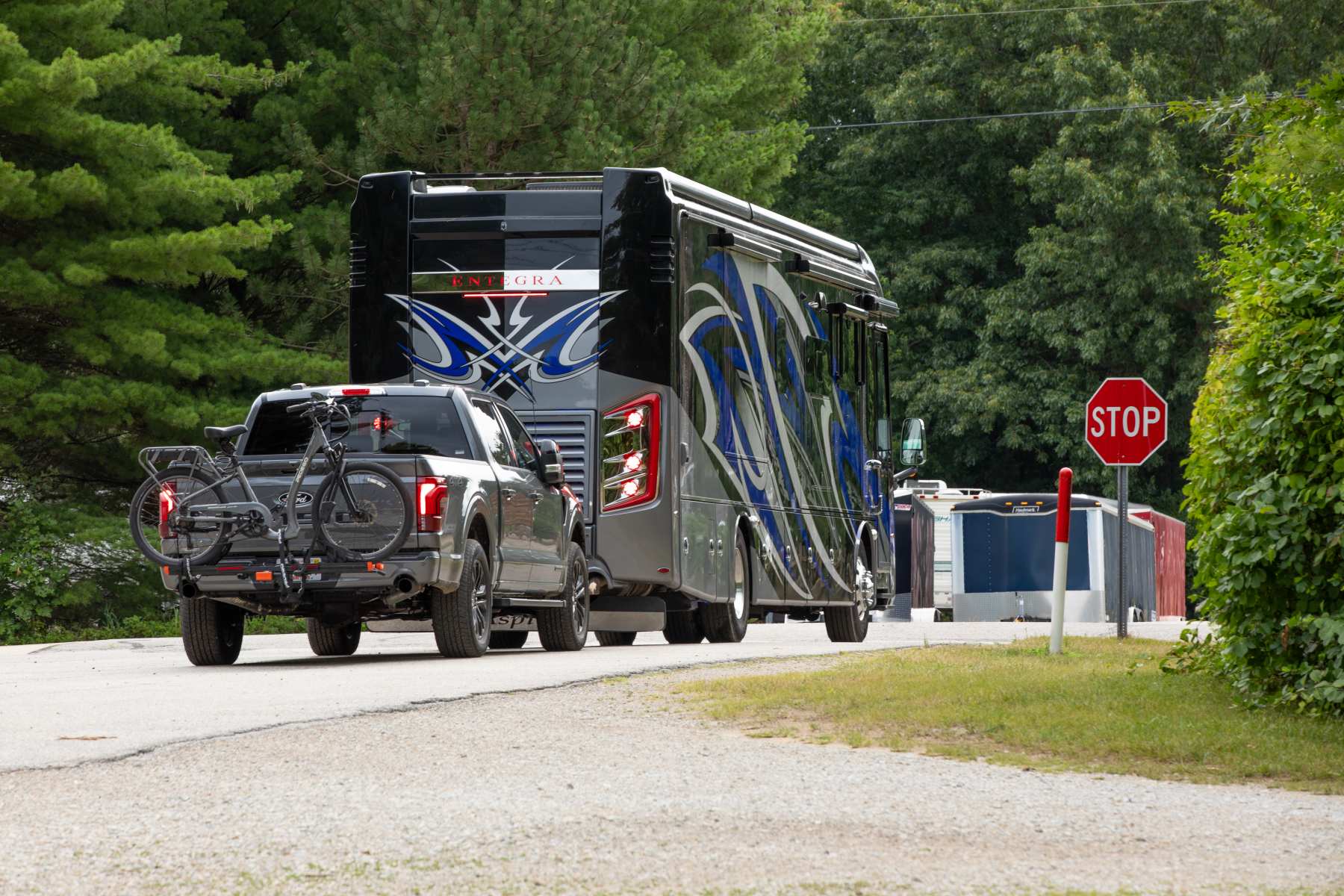
A tow bar is used to connect a vehicle (typically a car or SUV) to a motorhome, RV, or tow vehicle for flat towing (meaning all four wheels of the towed vehicle remain on the ground). It allows the towed vehicle to roll behind the towing vehicle safely and securely without the need for a trailer. Tow bars are commonly used by RV owners who want to bring a smaller vehicle along for local travel once they reach a campsite.
2. What is the difference between a hitch and a tow bar?
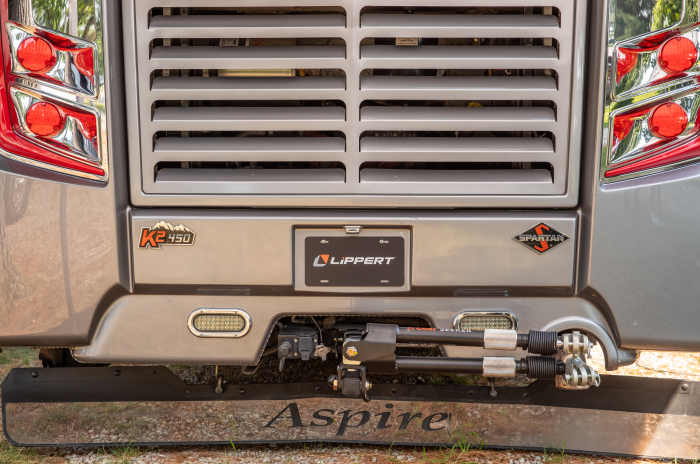
A hitch and a tow bar serve different but complementary roles in a towing setup. The hitch is a receiver mounted to the frame of the towing vehicle, like an RV, truck, or SUV, and acts as the primary attachment point for various towing accessories. One of those accessories can be a tow bar, which is the equipment used to connect a second vehicle (the one being towed) to the towing vehicle.
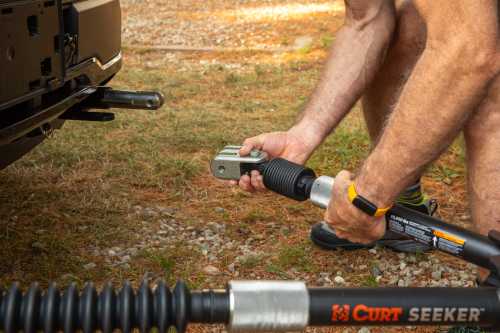
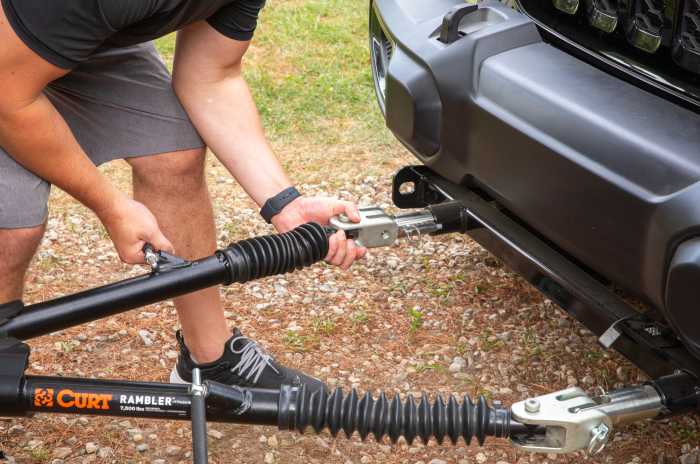
The tow bar attaches to the front of the towed vehicle and plugs into the hitch receiver, allowing the towed vehicle to roll on all four wheels behind the tow vehicle in what’s known as flat towing. In essence, the hitch is mounted on the vehicle doing the towing, while the tow bar bridges the connection between the two vehicles.
3. Do you need a braking system to flat tow?
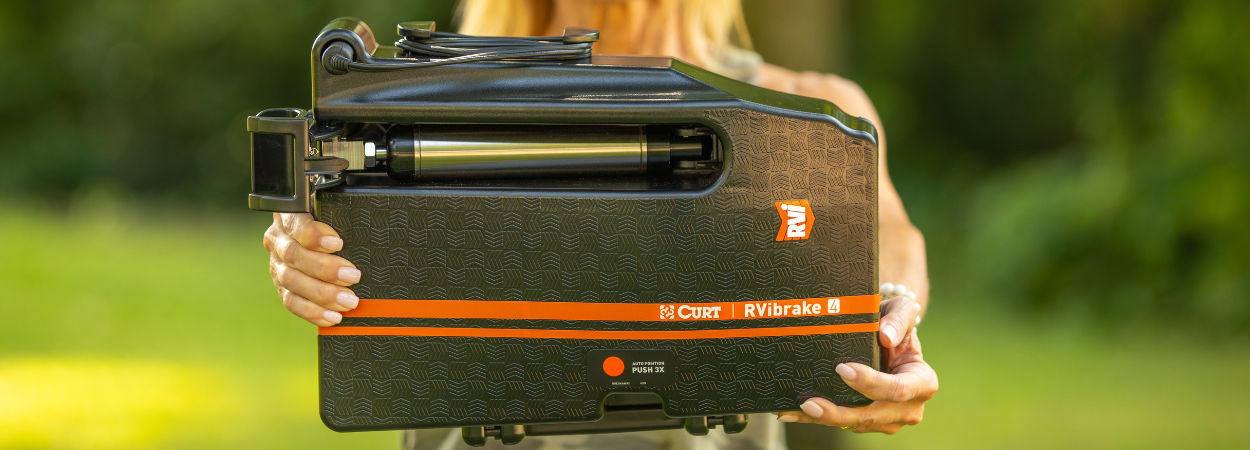
Yes, in most cases, you do need a supplemental braking system to flat tow a vehicle safely and legally. A braking system applies the brakes on the towed vehicle in sync with the tow vehicle, helping to reduce stopping distance and prevent excessive strain on the towing vehicle’s brakes.
Many states and provinces require a braking system by law, especially if the towed vehicle exceeds a certain weight—often around 1,500 to 3,000 lbs. Even if not legally required, using one significantly improves safety and control, particularly during emergency stops, steep descents, or long-distance travel.
4. Does CURT offer accessories to complete my dinghy towing setup?
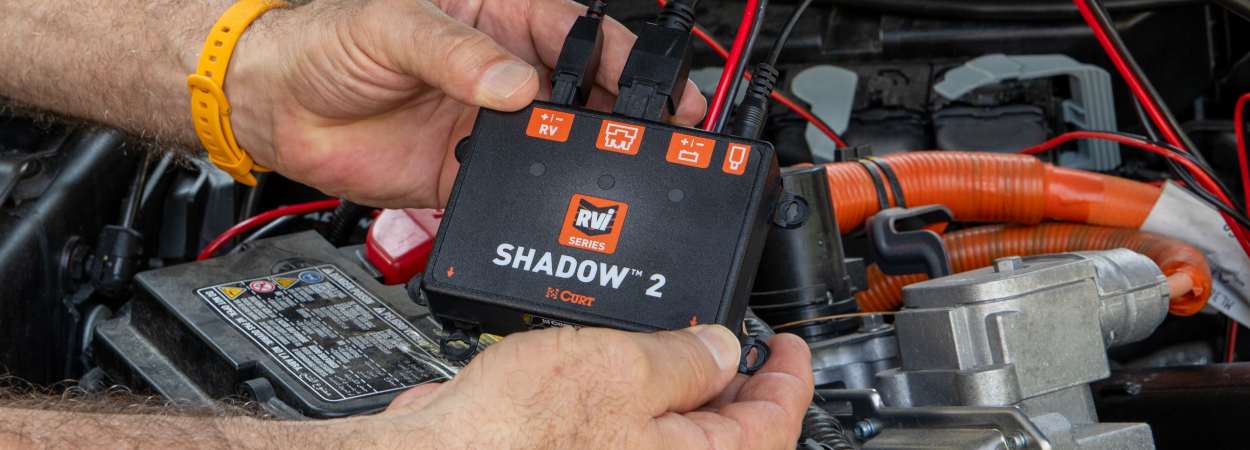
Yes, we offer base plates, wiring, security cables, electrical plugs, fuses, adapters, and other accessories to outfit your setup. Check out this helpful dinghy towing guide to determine everything you need to dinghy tow.
5. Are CURT tow bars compatible with competitive base plates?
CURT is continuing to develop the widest application-specific base plate offering. However, if we do not have your specific model, our tow bars are compatible with Blue Ox attachment tabs.
6. Why are the quick links stamped WLL880lbs?
The quick links are stamped WLL880lbs because this is the working load limit for a component under tension. Since the quick links are used in combination with safety cables, they use the component's breaking strength. The (WLL) Working Load of the quick link is 20% of the component's Breaking Strength. The Breaking Strength for each quick link is 4,400 lbs.

 ARIES
 CURT
 LUVERNE
 UWS