
 ARIES
ARIES  CURT
CURT  LUVERNE
  UWS
UWS 




Gooseneck Hitches 101
If you're looking into towing heavy loads with your pickup, you’ve probably come across the term gooseneck hitch. But what is a gooseneck hitch, exactly? This specialized hitching system is mounted in the bed of a truck and connects to a gooseneck trailer using a simple ball-and-coupler setup. It's a favorite among professionals and ranchers for its impressive weight capacity, compact design, and strong, stable connection — perfect for hauling livestock, equipment, and other oversized cargo.
In this guide, we’ll break down how gooseneck hitches work, explore their pros and cons, and help you figure out if they’re the right fit for your towing needs.
What is a Gooseneck Hitch?
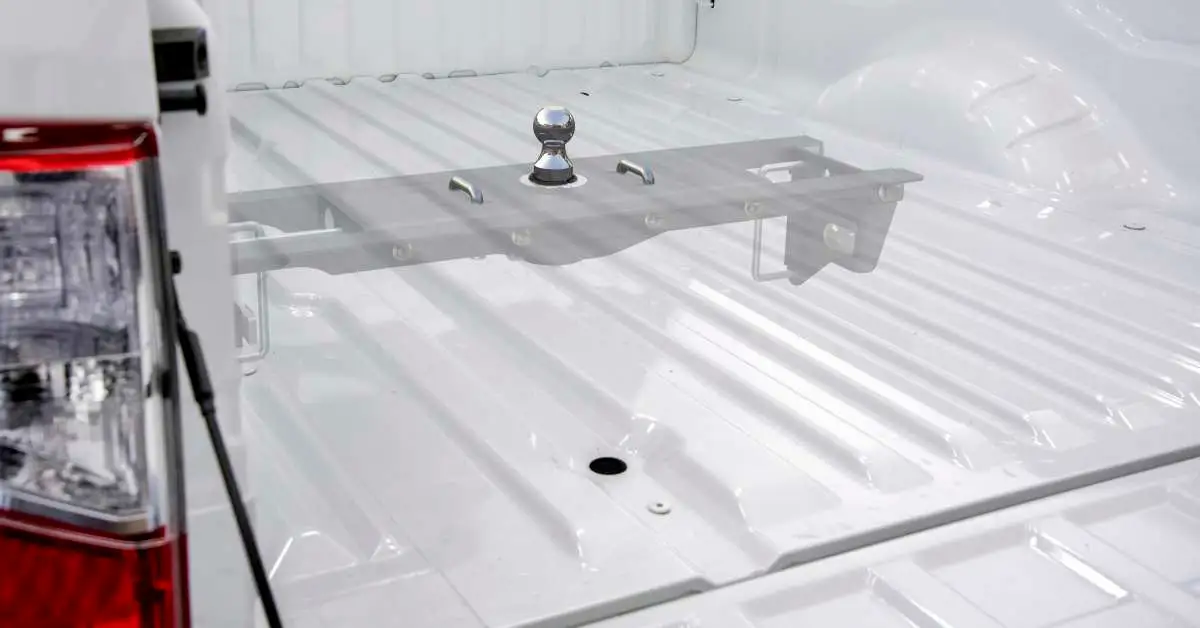
A gooseneck hitch is, as the name would imply, a hitch installed in the bed of a pickup truck that’s designed to connect to a gooseneck trailer. For many models, most of the hitch’s structure is in the tow vehicle’s undercarriage, apart from a trailer ball that sticks up out of the truck bed.
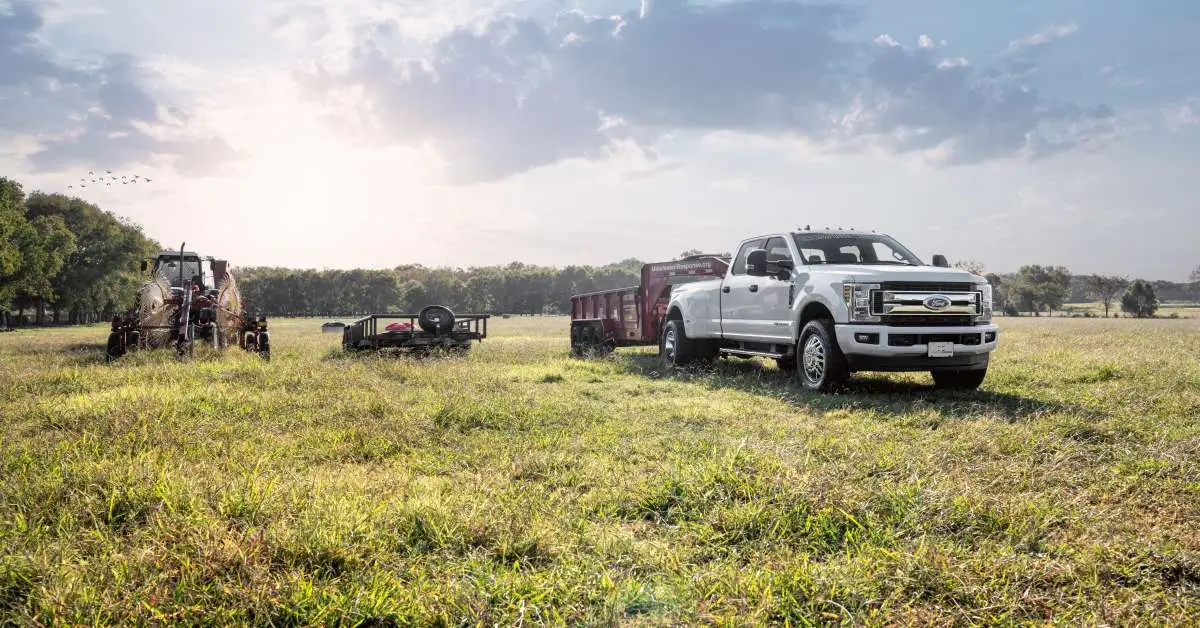
This inevitably begs the question: what is a gooseneck trailer? Gooseneck trailers are heavy-duty trailers typically used to transport livestock or similarly large cargo. Their name comes from the part of the trailer that connects to the hitch — a long, swooping piece of metal that resembles a goose’s curved neck.
Pros & Cons of Gooseneck Hitches
Pros:
- High Weight Capacity: These hitches can handle up to 30,000 pounds!
- Smaller Size: Compared to hefty 5th wheel hitches, these hitches are lighter and don’t take up much space in the truck bed.
- Less Expensive: They are a bit less expensive than 5th wheel hitches.
- Easy Operation: The trailer ball and coupling mechanism is secure and fairly easy to use.
Cons
- Pickup Trucks Only: Due to their design, these hitches can only be installed in pickups with truck beds.
- Drilling for Installation: In order to install the hitch, you will usually need to drill a hole in your truck bed. If you don’t measure correctly, you may find yourself with an unwanted hole. Yikes!
- Less Stable for Tall Trailers: While gooseneck hitches are secure, the ride isn’t quite as stable when towing taller trailers.
- Noise: Gooseneck hitches are secure, but unfortunately, they’re not very quiet.
Parts of a Gooseneck Hitch
Let’s take a look at some of the components you might find in a gooseneck hitch.
- Trailer Ball: The metal sphere that the trailer actually couples onto, sticking out of the truck bed.
- Center Section: The piece of metal that the trailer ball rests on, positioned underneath the truck bed.
- Plate: In some gooseneck hitch models, the plate sits in the truck bed and holds the trailer ball, letting it protrude upward.
- Rails: These components hold the hitch assembly in place, installed either under or on the truck bed.
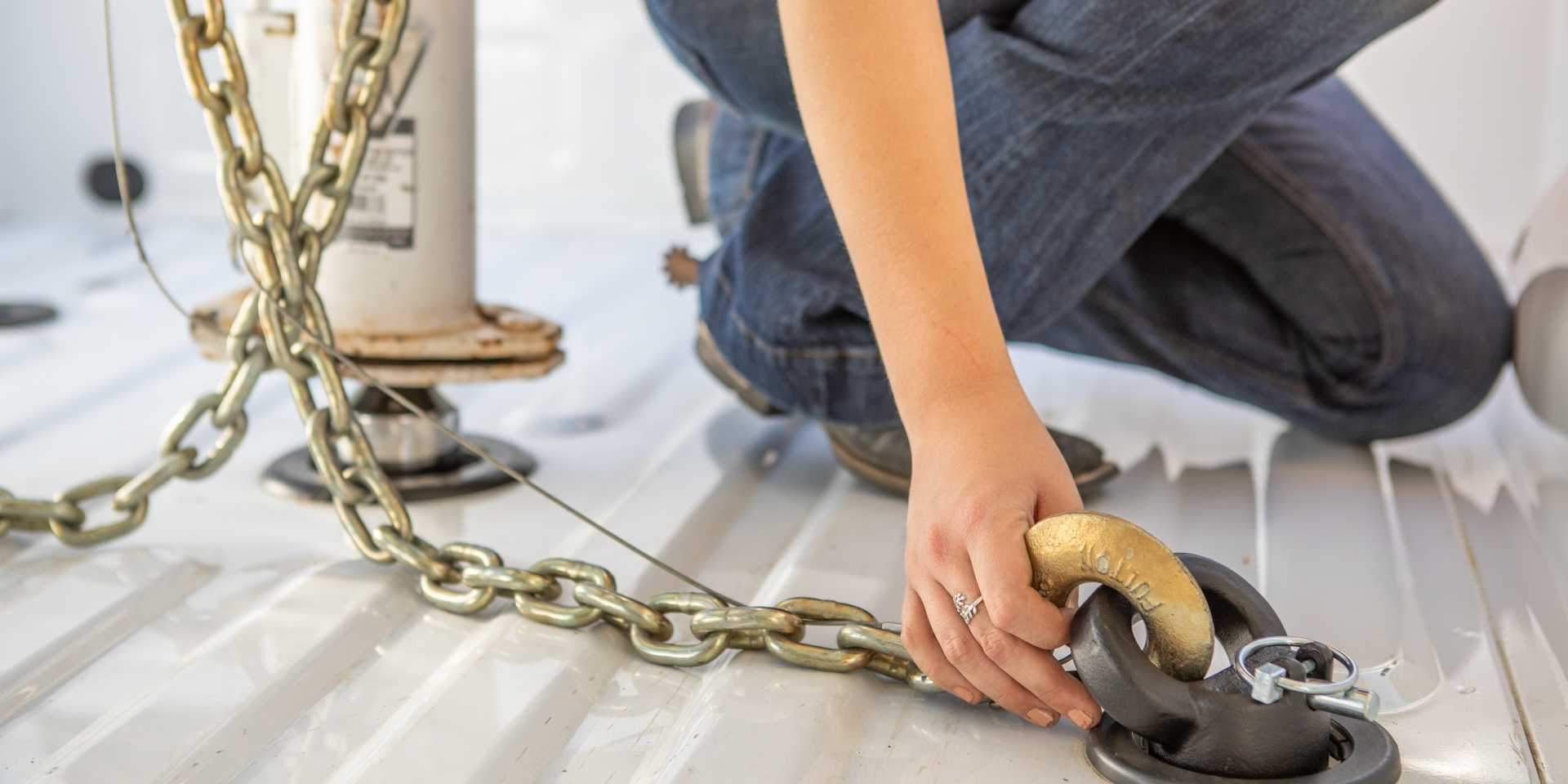
- Safety Chain Anchors: These components offer places for the trailer’s safety chains to attach to the truck, offering a safety net in case the hitch itself malfunctions on the move.
- Lock: This part can lock around the gooseneck hitch’s coupler, providing extra security for the connection.
How a Gooseneck Hitch Works
Gooseneck hitches are installed in the tow vehicle’s truck bed, right above the rear axle. While most of the components may rest under or on top of the bed depending on the type, the trailer ball sticks up from the bed. The end of the “gooseneck” portion of the trailer lowers onto the trailer ball, coupling onto it. The ball-and-couple mechanism, along with the gooseneck, allows the trailer to not only be towed, but to make tight turns without crashing into the tow vehicle’s bumper. This system places more direct weight on the tow vehicle, increasing the amount of weight you can handle and granting you greater control while you tow.
Remember: unless the trailer ball is removable or fold-down, it will have an impact on what cargo you can place in the truck bed.
Types of Gooseneck Hitches
Gooseneck hitches come in several different forms: let’s look at some of the types you may come across!
Puck System Gooseneck Hitch
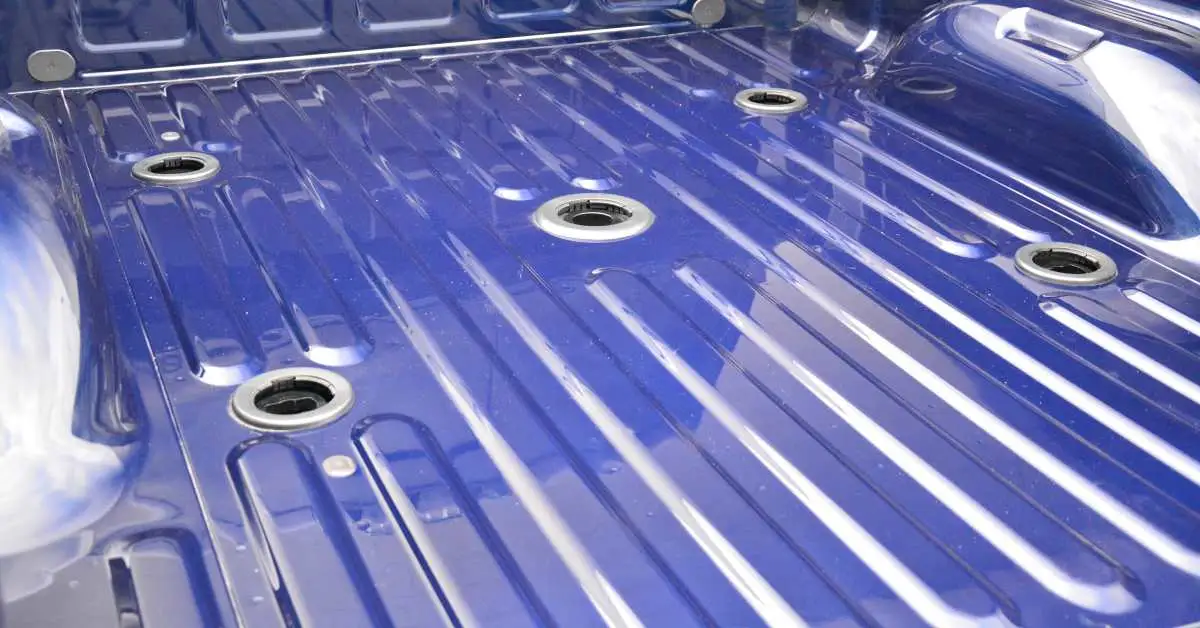
If you want simple installation, a puck system works wonders! The system involves pre-installed holes in the truck bed, concealed by puck-shaped covers. A trailer ball and safety chain anchors can simply be placed into the holes and locked into place. The problem, of course, is that you will need a truck with a puck system kit installed in order to use it.
OEM Gooseneck Hitch
Short for original equipment manufacturer, OEM gooseneck hitches are made for specific truck models. This makes installation easy and means you won’t need additional brackets to hold it in place. That said, you will need to make sure that you pick the correct hitch for your truck. If you have an older vehicle, you may struggle to find one.
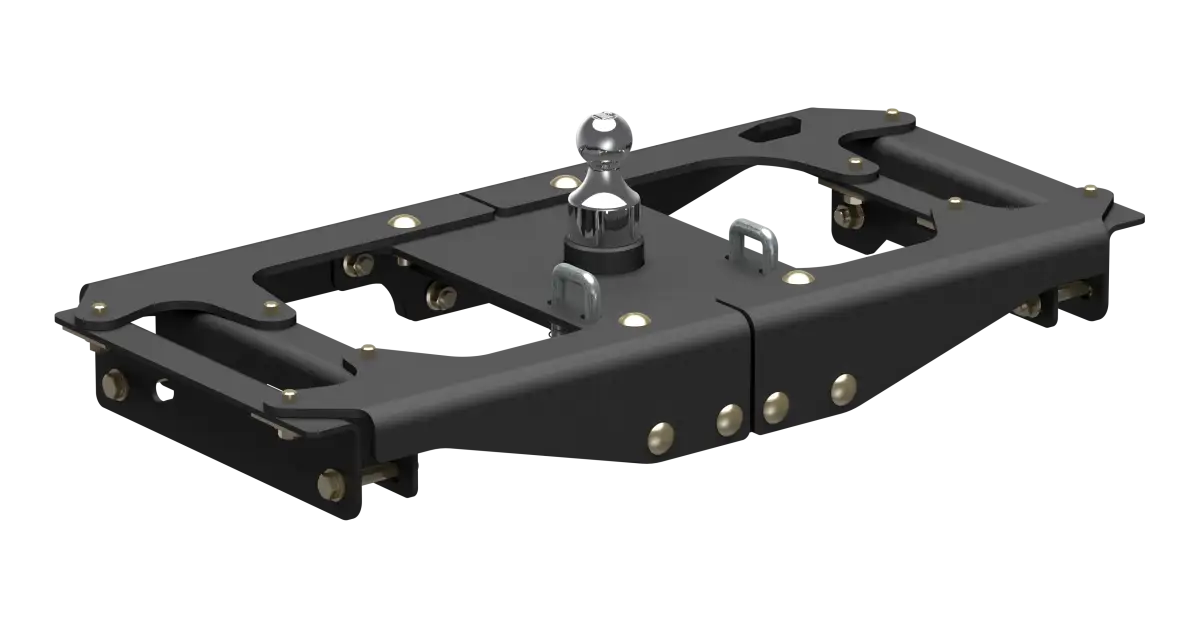
Under-bed Gooseneck Hitch
One of the most popular types, under-bed hitches are the type of gooseneck hitch that most people are likely to picture. Most of the hitch’s components are bolted under the truck bed, with the trailer ball and safety chain anchors poking up through drilled holes in the bed. This system provides a strong connection between truck and trailer, along with plenty of space in the truck bed for cargo.
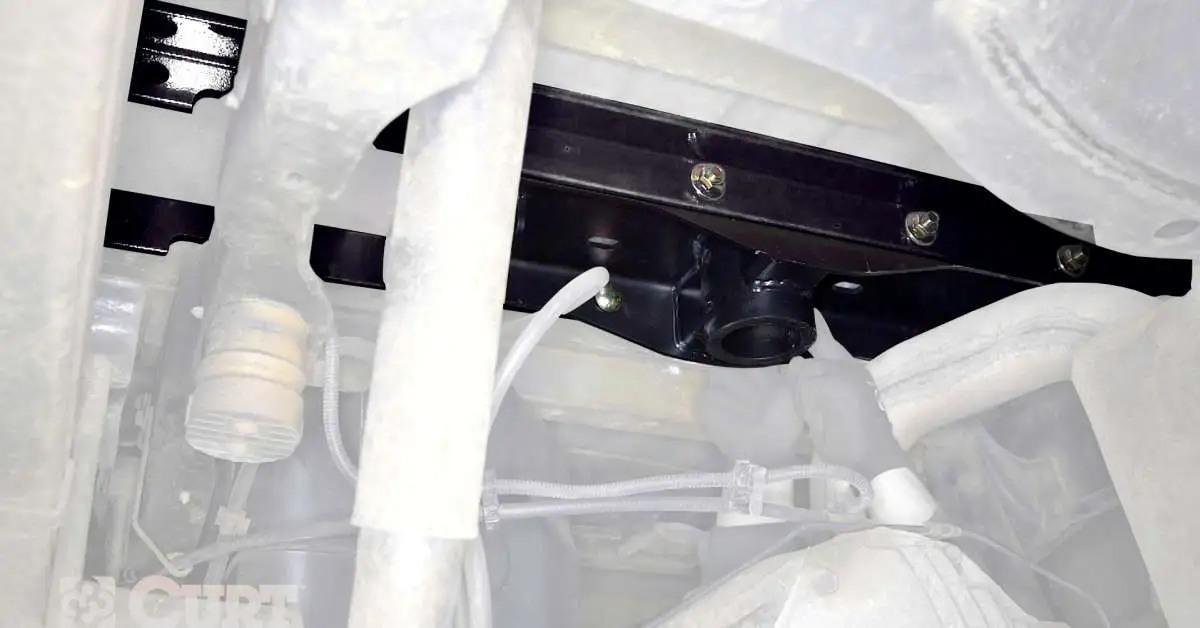
Over-bed Gooseneck Hitch
Similar to 5th wheel hitches, over-bed gooseneck hitches rest on rails installed in the truck bed. This makes them easier to install than their under-bed counterparts and simple to remove, often giving them the alternate name of removable gooseneck hitches. While they are convenient and cost-effective, they may not be able to handle as much weight as the more permanent gooseneck hitches. To support an over-bed gooseneck hitch, installation brackets bolt directly to your truck’s frame, often using existing holes for a secure, no-drill fit.
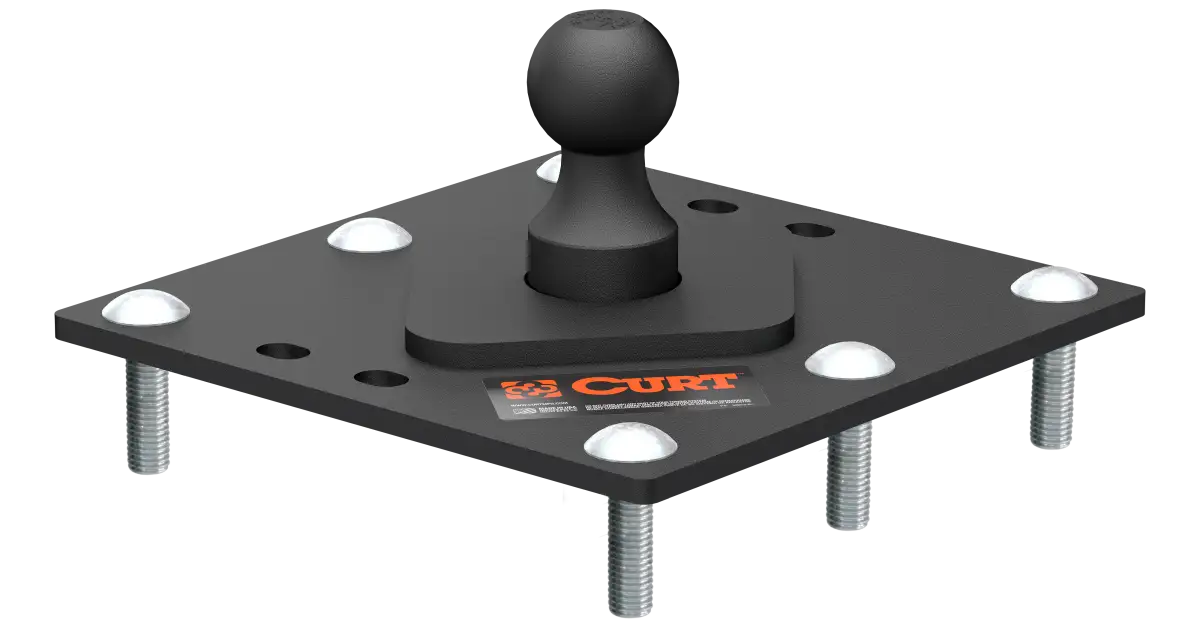
Folding/Flip-over Ball Gooseneck Hitch
As the name implies, the folding or flip-over ball gooseneck hitch has a very handy feature — a trailer ball that can be tucked into the truck bed, freeing up space in the truck bed when not in use. Though they are easy to use, the additional components required for a folding/flip-over ball means that these hitches cost more. The folding mechanism may also lower the amount of weight the hitch can handle.
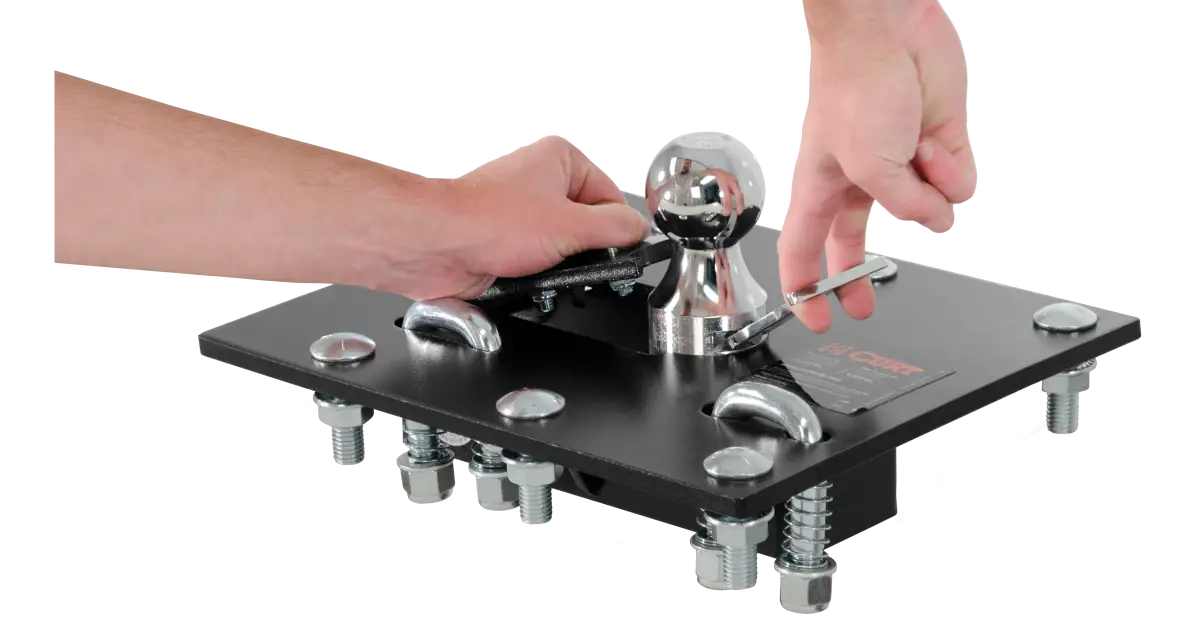
Fixed Ball Gooseneck Hitch
Unlike the folding/flip-over ball hitch, the trailer ball on the fixed ball gooseneck hitch stays in place permanently. These hitches are strong and durable, granting you a high weight capacity and great control while on the move. Their biggest problem is that since they’re permanent, the trailer ball will always limit the amount of cargo that can safely fit in the truck bed.
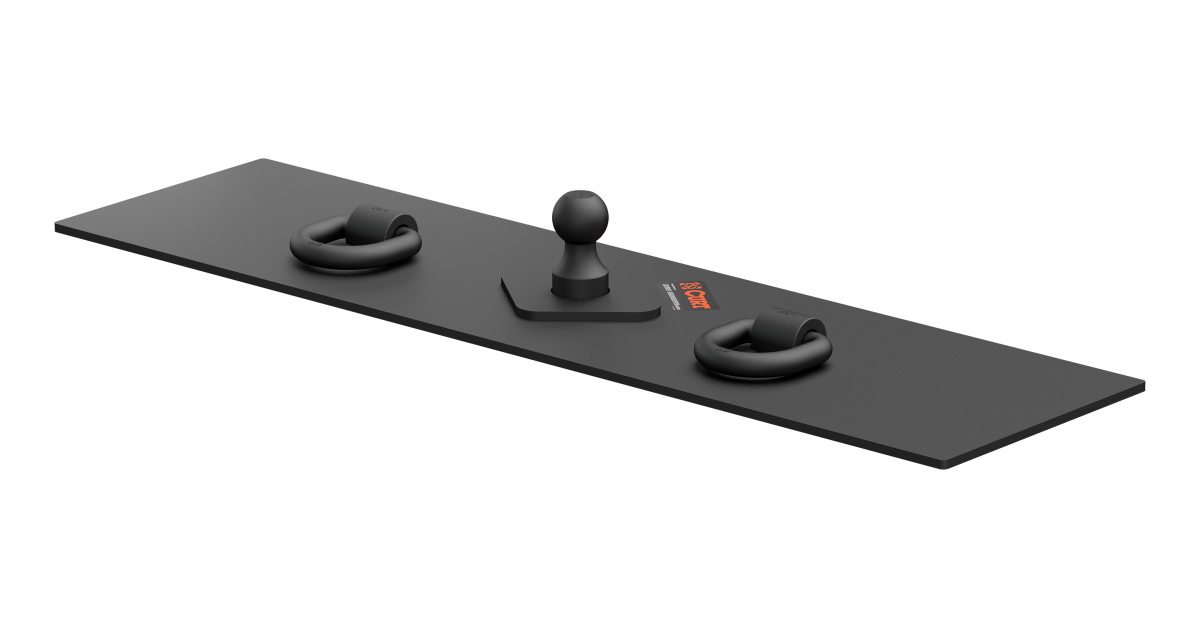
5th Wheel Gooseneck Hitch Adapter
Do you already have a 5th wheel hitch installed in your truck bed? No problem! A 5th wheel gooseneck hitch adapter can be installed on 5th wheel hitch rails, allowing you to couple with a gooseneck trailer. If you want to use the same tow vehicle for both a gooseneck trailer and a 5th wheel trailer, this adapter is a convenient solution.
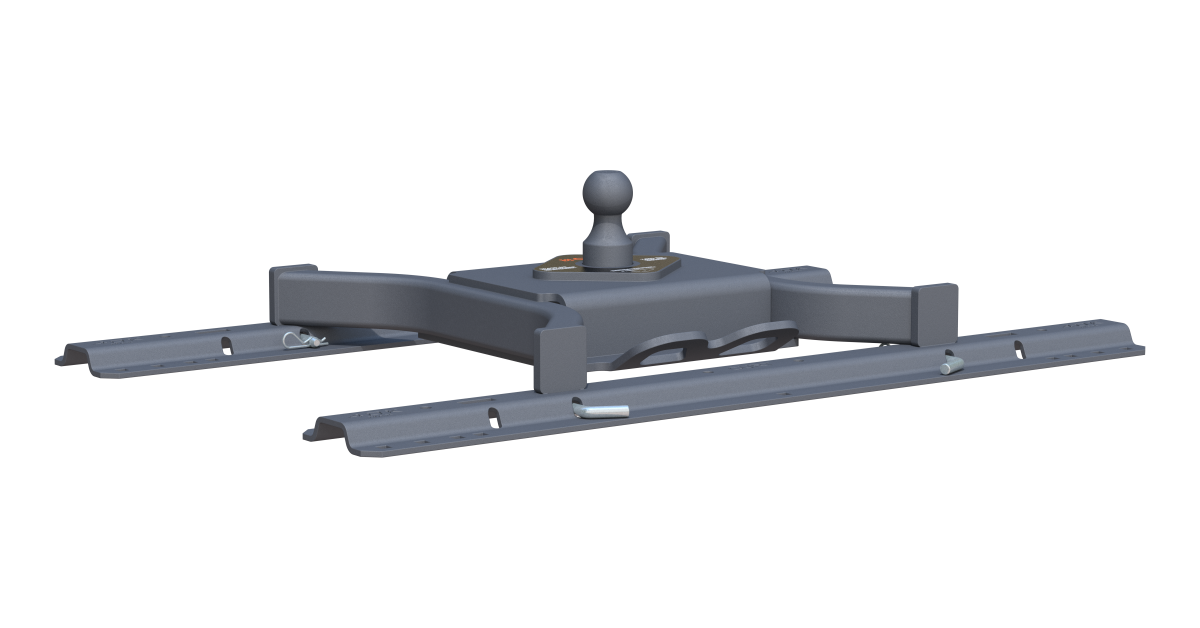
Gooseneck Hitch vs. 5th Wheel Hitch
If there are two types of hitches that constantly get compared to each other, it is the gooseneck hitch and the 5th wheel hitch. They both have higher weight capacities and must be installed in pickup trucks. If you need a strong, reliable hitch, you will likely be picking between these two.
To get an idea of which you’ll need, let’s compare these two hitches.
Gooseneck hitches operate with a ball-and-coupler connection and are used to haul livestock and commercial trailers. They don’t take up much space in the truck bed, leaving room for more cargo, and are less expensive. However, the design means that the ride is less stable.
In comparison, 5th wheel hitches employ a jaws-and-kingpin connection and are usually used to tow large RVs. They take up a significant amount of space in the truck bed and are more expensive; however, their careful construction leads to a more stable ride.
Learn more about gooseneck vs. 5th wheel hitches here!
Gooseneck Hitch Installation
Like any other hitch, a gooseneck hitch needs to be properly installed for the safety of you, your passengers, and your possessions. While you can do it yourself with the proper tools, remember that professional installation is always an option.
Let’s walk through a basic checklist of how to do so:
1. Remove Spare Tire & Trim
You will need room in or under the truck bed for your gooseneck hitch, so remove the spare tire and any pieces of trim that may get in the way.
2. Measure & Drill the Ball Hole
The hitch’s trailer ball should be above or slightly forward of the rear axle and centered between the wheel wells. Carefully measure the truck bed to locate the correct place, then drill the hole. Make sure to double check your measurements before you pick up the drill — you don’t want to make a mistake here!
3. Insert Crossarm Brackets
Insert the rear crossarm bracket into the rear wheel well access point until it’s centered on the truck frame. Use a wrench to rotate the crossarm into the model’s proper orientation. Insert the front crossarm bracket and position it as described in the instruction manual.
4. Install Gooseneck Center Section
Prepare the gooseneck center section for installation, attaching any needed hardware. Lift the center section into place under the truck bed. You may need a friend or special equipment to safely get it in place. Once there, secure the center section to the crossarm brackets.
5. Attach Side Plate Brackets
Install the side plate brackets, attaching them to the crossarm brackets from inside the wheel wells on both the driver and passenger side. Make sure the hitch is squared up with the truck bed.
6. Torque Hardware
Torque any hardware on the hitch according to the manufacturer’s specifications, including the nuts and bolts on the center section and brackets.
7. Install Safety Chain Anchors
Using the center section as a template, drill holes for the anchors from underneath the truck bed. Drop the anchors into the holes and attach any needed hardware.
8. Install Operating Handle
Install the locking pin mechanism for the gooseneck ball into the side of the ball hole. Slide the operating handle into the wheel well, pass it through the hitch center section, and slip it into the locking pin. Attach any needed fasteners. Test the handle to make sure it works, then replace the spare tire and trim.
Common Gooseneck Accessories
Due to their design, gooseneck hitches can employ several different accessories to accomplish tasks. While you should do your own research to see if you need any, let’s look at some of the most common attachments.
- Gooseneck Extension: This device extends the reach of the hitch for longer loads and increased maneuverability.
- High-Rise Ball: This noticeably tall trailer ball gives you extra clearance in the truck bed, though it may have a negative impact on the hitch’s weight capacity.
- Inverted Ball: This trailer ball can be tucked into the hitch’s mounting hole, saving you space in the truck bed when not in use.
Disclaimers: These photographs, recommendations, and approximations are intended for demonstration purposes only and do not reflect the specifications of any particular tow vehicle, recreational vehicle, or trailer. Always consult the manufacturer’s Owner's Manual.